Most companies ask the same question today: “How far should we go with AI in our ERP?”
Here’s a simple, scalable approach I’ve seen work—from SMEs to mid-market enterprises.
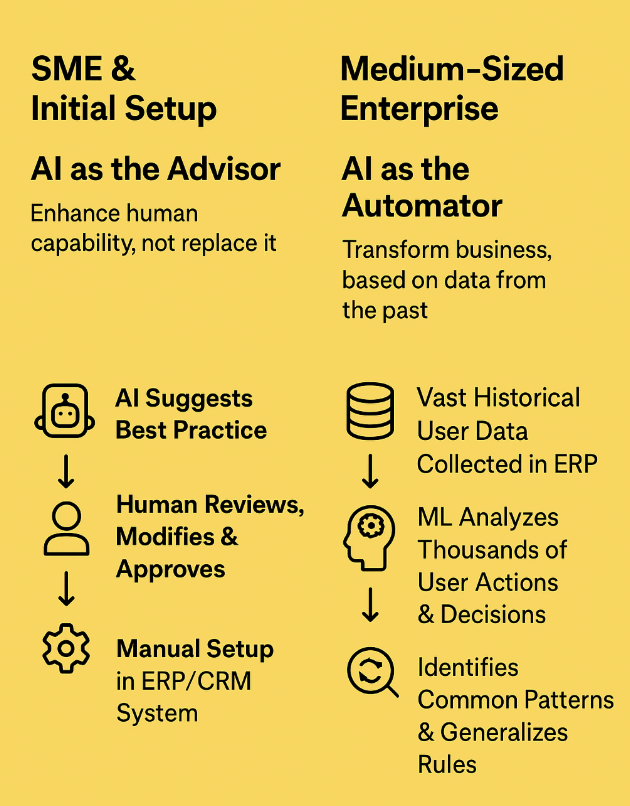
1) SME Stage — AI as the Advisor
At the SME level, AI shouldn’t run the company (yet). It works best as a suggestion engine.
Example:
When we implemented Odoo 17 for one of our client from France during their migration, we used AI tools only to recommend workflow structures—like predicting reorder points based on past sales from Xero export files. The team still reviewed everything manually before applying it in Odoo.
Result: 32% faster order-processing setup time just because decision-making became easier.
Flow:
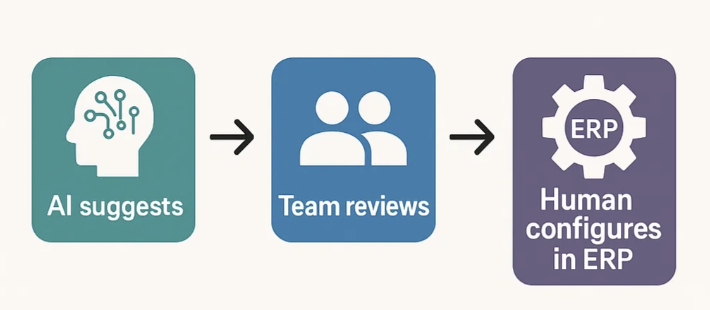
AI suggests → Team reviews → Human configures in ERP
No magic. Just decision support.
2) Medium Enterprise — AI as the Automator
Once the ERP collects enough historical data, ML can actually automate repetitive actions.
Example:
A client in the U.S. consumer goods sector had 180k+ historical CRM actions. Using pattern analysis, we identified repetitive manual steps, like tagging customer categories and updating opportunity stages.
We automated these inside Odoo, cutting admin time by 41%.
Flow: ERP data → ML detects patterns → Rules converted into automation
Still not Skynet.
If your ERP could automate only one workflow today, which one would save you the most hours per month?